Connecting with โ€˜Cynefinโ€™

Expressive Arts Teachersโ€™ Working Group with Carmarthen Museum and Cragen Beca

I’m really excited that Carmarthenshire County Council’s Education Department has been developing a schools resource project with Carmarthenshire Museum funded by GEM (Group for Education in Museums).

In January 2023 I met with a group of teachers, along with Louise Morgan, the School Support Advisor from Carmarthenshire School Improvement and textile artist Louise Bird.

Louise (Bird) later went on to develop workshops with teachers from primary and secondary schools in the county to help develop skills for a resource that can be taken into schools. The project uses a museum object as a key for engagement in schools, and it’s such an honour that the Cragen Beca costume bought by the museum for their collection is the focus of the work.

โ€œThe group were able to meet with Cragen Beca artist Kathryn Campbell Dodd at the start of the project. This connection was invaluable, providing a wealth of additional information which the teachers were able to use to inform the development of the learning resource.

Following the introductory meeting the group developed their ideas, worked closely with textile artist Louise Bird, a contributing artist in the Cragen Beca Project. Two practical workshops with Louise were held at the museum. The group were able to use this time to explore the Cragen Beca costume in more depth and collate the textile processes they would include in the learning resourceโ€ฆThe skills reference information included examples of natural dyeing processes, Sashiko stitching, applique and textile design. The group also researched the history of textile banners during the workshops, including the purpose of these banners from an historical context and contemporary perspective.

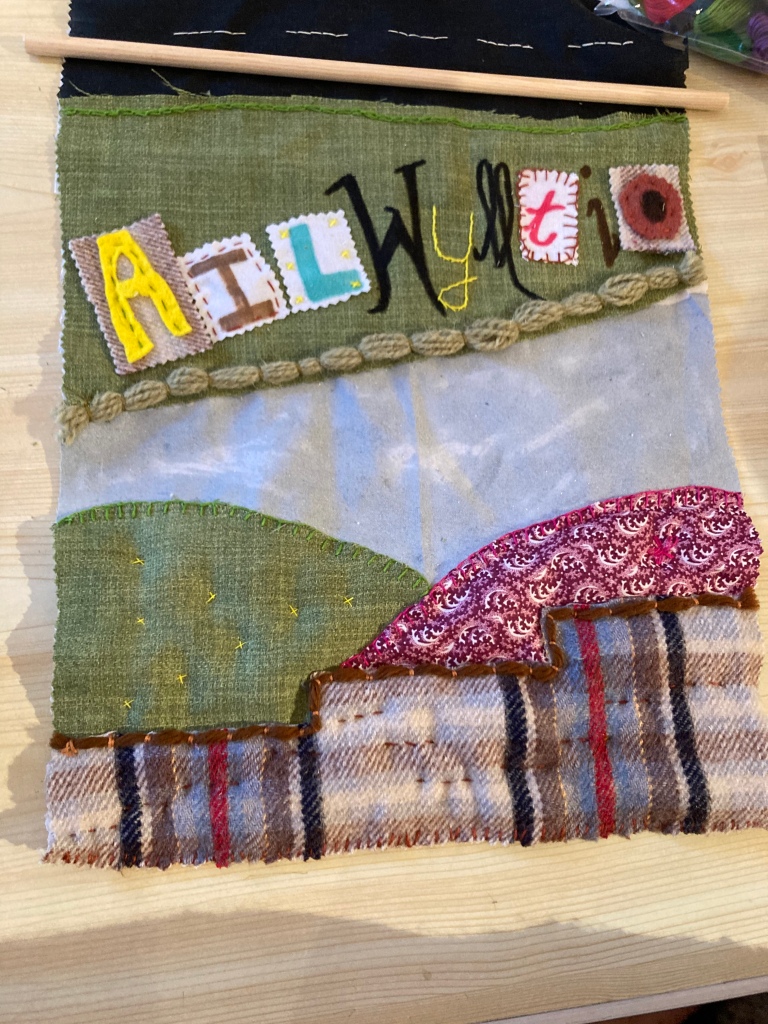
The Expressive Arts learning resource has been developed to support learners across Progression Steps three and four. It offers an opportunity to link across the primary and secondary phases and has potential for future development as a transition project across schools. The resource includes skills-based information on textiles processes and links to the visual arts elements of colour and pattern. It also provides opportunities for teachers to incorporate the Cragen Beca Project into their curriculum design with examples of cross cutting links included. The Curriculum for Wales places the needs and interests of each learner at the centre of curriculum design. It is anticipated that this resource will provide schools with an example of a learning experience which supports their learners to express their passion for change through a creative medium. Navigating change has become a familiar aspect of the school landscape and providing our future decision makers with a creative platform for expression and discussion is therefore essential.

The learning resource will form part of a pilot project across the three participating schools in the spring term (2023). This pilot will provide feedback from learners and final outcomes. This information will be shared across Carmarthenshire schools and form part of an on-going schoolsโ€™ support programme within the Expressive Arts. The learning resource will be launched at a sharing event and exhibition of work which will take place at the museum in Spring 2023.”

Photographs courtesy of Louise Bird

Cragen Beca: Kathryn Campbell Dodd

Amgueddfa Sir Gaerfyrddin // Carmarthenshire Museum

Yr arddangosfa Cragen Beca yn parhau tan 1 Hydref 2022 // The Cragen Beca exhibition continues until 1 October 2022

Amgueddfa Sir Gaerfyrddin // Carmarthenshire Museum, Abergwili SA31 2JG

Dydd Mawrth – Dydd Sadwrn 11am – 4pm // Tuesday – Saturday 11am – 4pm

Simon Whitehead

Mae’r artist symud Simon Whitehead wedi gweithio gyda mi i ddatblygu symudiadau gyda thri pherfformiwr a fydd yn gwisgo gwisgoedd Cragen Beca ar gyfer ffilm artist a fydd yn cael ei dangos ochr yn ochr รข’r gwisgoedd yn Amgueddfa Sir Gaerfyrddin, Abergwili o 14 Mai.

Yn wreiddiol yn Geograffydd, hyfforddodd Simon mewn Dawns yn Llundain ac Efrog Newydd ar ddechrau’r nawdegau. Mae ganddo ddiddordeb yn y ffordd y mae pobl bob amser yn symud mewn gohebiaeth รข grymoedd, bodau a deunyddiau eraill a bod dawns yn ffordd o ddod adref ar y ddaear gyda’n gilydd – nid ydym byth yn symud ar ein pen ein hunain. Mae Simon wedi teithio’n eang gyda’i waith a thros y 10 mlynedd diwethaf mae wedi canolbwyntio ei ymarfer yn nes at adref. Mae’n aelod o Maynard Abercych CIC, artist rhyngddisgyblaethol ar y cyd sy’n cydweithio ar raglen o weithgarwch dawns yn gysylltiedig ym mhentref Abercych gorllewin Cymru. Gyda’i gilydd, maent yn rheoli dawns Twmpath/pentref, yn gweithio drwy breswyliadau dawns barhaus, gweithdai, partneriaethau lleol a rhyngwladol.

Mae yng nghanol PhD (Ymarfer fel Ymchwil) a ariennir gan yr AHRC ym Mhrifysgol Glasgow. Mae’n meddwl am syniadau ecolegol Posthuman mewn perthynas รข choreograffau o gyffwrdd ac effaith. Mae Simon hefyd yn therapydd Craniosacral.

Simon has lived and worked in rural Wales for the last 28 years. He currently lives in Abercych with his partner/ dancer Stirling Steward and his 2 daughters.


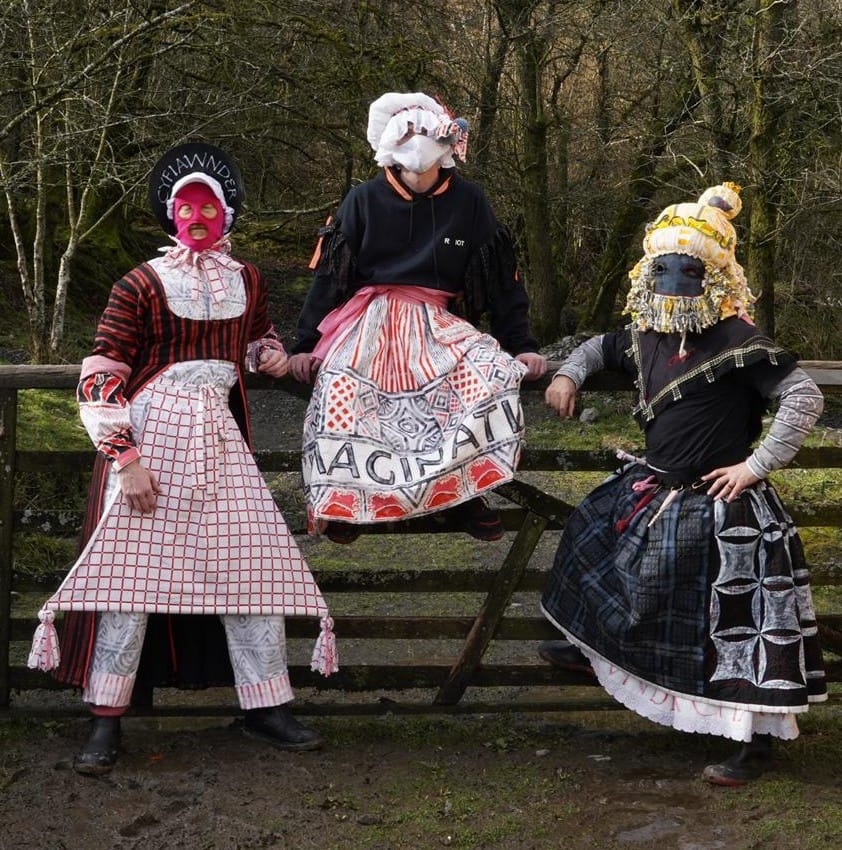
Movement artist Simon Whitehead has worked with me to develop movements with three performers to wear the Cragen Beca costumes for an artist’s film which will be shown alongside the costumes at Carmarthenshire Museum, Abergwili from 14 May.

Originally a Geographer, Simon trained in Dance in London and New York in the early nineties. He is interested in how humans are always moving in correspondence with other forces, beings and materials and that dance is a way to become at home on the earth with each other – we are never moving alone.

Simon has travelled widely with his work and over the last 10 years has focussed his practice closer to home, he is a member of Maynard Abercych CIC, an interdisciplinary artist collective that collaborate on a programme of engaged dance activity in the village of Abercych west Wales. Together, they manage the Twmpath/village dance, work through ongoing dance residencies, workshops, local and international partnerships.

He is in the midst of an AHRC-funded PhD (Practice as Research) at The University of Glasgow, he is thinking about Posthuman ecological ideas in relation to choreographies of touch and affect. An artist book is emerging out of this work. Simon is also a Craniosacral therapist.

Cragen Beca a Talog

Rhoddwyd Cregyn Rebeca i Amgueddfa Sir Gaerfyrddin, gan ddisgynnydd y perchennog gwreiddiol, Gwynfor Phillips yn yr 1980au ac roedd hanes y gragen hon yn rhan oโ€™r ddogfen aโ€™i gwasanaeth.

Cragen Beca โ€“ Hanes byr

Pan oeddwn yn blentyn cadwyd โ€œCragen Becaโ€ o dan glo mewn cwpwrdd pren bychan, wediโ€™i guddio y tu รดl i soffa ym mharlwr fy mam-gu yn Nhalog. Ar un adeg bu ei chartref yn dafarn y โ€œCastle Innโ€, lle y bu ei thad aโ€™i thad-cu yn dafarnwyr, ac ymhen amser etifeddodd hi y cartref.

Yn ystod Terfysgoedd Beca (1839-46) rhoddwyd y gragen hon (Cragen Beca) iโ€™r tafarnwr, sef fy hen hen dad-cu, ac feโ€™i defnyddiwyd ganddo i alwโ€™r dilynwyr i gyfarfodydd cudd ac ati. Ef oedd y cynullydd swyddogol. Oโ€™r herwydd roedd ganddo ran bwysig iawn yn y Terfysgoedd oedd yn ei roi mewn sefyllfa o berygl sifil mawr. Pan ddaeth Terfysgoedd Beca i ben aeth yr awdurdodau ati i gorlannu pawb fuโ€™n gysylltiedig รขโ€™r terfysgoedd. Cafodd llawer eu dal, carcharwyd rhai, trawsgludwyd eraill, ac aeth llawer o ddynion o Dalog i guddio mewn llofftydd ffermydd a hyd yn oed yn y coed a amgylchynaiโ€™r pentref. Maeโ€™n amlwg y buโ€™r tafarnwr yn ofalus iawn trwy gydol y cyfan gan na chafodd ei amau hyd yn oed!

Dim rhyfedd felly y cafodd y Gragen ei chuddio mor ofalus โ€“ am ganrif gyfan cafodd ei chyfrinachau eu cadw mor dawel fel na fyddai fy mam-gu ond yn ei dangos ar adegau prin, ac ni fyddai ond yn sibrwd amdani hyd yn oed! Unwaith yn unig yโ€™i clywais yn cael ei chwythuโ€™n gyhoeddus, a hynnyโ€™n ddiarwybod iddi hi. Yr achlysur oedd llwyddiant ymgeisydd Rhyddfrydol mewn etholiad seneddol. Roedd fy ewythr wedi mynd รขโ€™r gragen oโ€™i chuddfan a chwythu ei lawenydd o ben y bryn, gweithred ffรดl ac annisgybledig a barodd iddo gael ei gosbiโ€™n eiriol a chorfforol gan ei fam!

A dyma droi at darddiad Cragen. Byddaiโ€™r rhan fwyaf o haneswyr yn cytuno maiโ€™r trefnydd athrylithgar y tu รดl i Derfysgoedd Beca yng ngorllewin Cymru oedd cyfreithiwr o Gaerfyrddin, Mr. Hugh Williams, brodor o Fachynlleth a briododd wraig o Sanclรชr, gan weithioโ€™n gyfreithiwr yng Nghaerfyrddin ond byw yng Nghydweli. Derbynnir fod ganddo dueddiadau radical a bod ganddo gydymdeimlad รขโ€™r Siartwyr. Ffermwyr a gweithwyr fferm oedd Merched Beca yn bennaf, y rhan fwyaf ohonynt yn anllythrennog, ac ni fyddai gan y rhan fwyaf ohonynt y gallu i drefnu ymgyrch guddiedig ond disgybledig iawn oโ€™r fath. Roedd yn galw am feddwl craff, deallus i gynnull cymunedau gwasgaredig o ffermwyr rhwystredig iawn yn rym effeithiol, a phwy well naโ€™r cyfreithiwr pragmataidd o Gaerfyrddin?

Maeโ€™n ymddangos fod gan Hugh Williams frawd a wasanaethai yn gonswl neuโ€™n Was Sifil yn Sierra Leone, aโ€™i fod wediโ€™i leoli yn Freetown, a sefydlwyd yn wreiddiol yn Granville yn 1788 yn gartref i gaethweision o Affrica a ryddhawyd. Roeddent wedi dod o ynysoedd y Caribรฎ a thir mawr America.

Yn ystod rhyfel 1939 โ€“ 45 gwasanaethais yn y Llynges Frenhinol, ac yn ystod un o fy ymweliadau รข Freetown gwelais angladd brodor. Arweinydd y cynhebrwng oedd dyn a chwythaiโ€™r gragen dro, gan gyfeirioโ€™r sain tuag at y mรดr. Roedd y sain yn ddigamsyniol, yr un sain โ€œhwtianโ€ adleisiol ag a glywais yn Nhalog flynyddoedd ynghynt! Buom yn siarad รขโ€™r dyn hwn a esboniodd maiโ€™r traddodiad oedd hysbysuโ€™r ysbrydion oedd yn byw yn y mรดr pryd bynnag y byddai enaid morwr yn dychwelyd iโ€™w orffwysfan terfynol. Feโ€™m hatgoffwyd yn syth o dduw Triton yn chwedloniaeth Roeg a reolaiโ€™r tonnau trwy chwythu ei gragen dro.

A ywโ€™n rhy annhebygol i dybio y cafodd Hugh Williams y gragen, a ddaeth yn โ€œGragen Becaโ€, gan ei frawd, a bod yntau yn ei dro wediโ€™i rhoi i dafarnwr y Castle Inn Talog iโ€™w defnyddio gan y โ€œcynullyddโ€ i alwโ€™r dilynwyr?

(A chan nad ywโ€™r gragen yn gynhenid i Orllewin Affrica, a yw y tu hwnt i ffiniau posibilrwydd y daethpwyd รข hi i Sierra Leone gan un oโ€™r caethweision a ryddhawyd?

*Dyfalu yw hyn, wrth gwrs.

Cragen Beca and Talog

Cragen Beca was given to Carmarthenshire Museum in the 1980s by descendant of the original owner, Gwynfor Phillips. This evocative account of the shell was part of the accession documentation.

Cragen Beca โ€“ A brief account

When I was a child โ€œCragen Becaโ€ was kept under lock and key in a small wooden cabinet, hidden away behind a settee in my grandmotherโ€™s parlour in Talog. Her home had once been the โ€œCastle Innโ€ public house, where her father and grandfather had been inn-keepers and which she inherited in due course.

During the Rebecca Risings (1839-46) this conch shell (Cragen Beca) had been given to the inn-keeper, who was my great great grandfather, and was used by him to muster the rioters to clandestine meetings etc. He was the official โ€˜whipper-upโ€. His involvement in the Riots was therefore most significant and put him in great civil danger. When the Rebecca Riots ceased there was a general round-up of all who were connected with the risings. Many were apprehended, some were imprisoned, others were transported, and many Talog men went into hiding in farm lofts and even in the woods which surrounded the village. It is obvious that the inn-keeper had kept a very low profile throughout because he was not even suspected!

No wonder then, that the Cragen was so carefully hidden โ€“ for a whole century its secrets were so closely kept that my mamgu would only show it on rare occasions, and even spoke about it in whispers! Only once did I ever hear it being blown in public, and that was without her knowledge. The occasion was the success of a Liberal candidate in a parliamentary election. My uncle had taken the conch from its hiding place and trumpeted his joy from the hilltop, for which indiscretion and indiscipline he was verbally and physically chastised by his mother!

And now to the origin of Cragen Beca. Most historians would agree that the organising genius behind the Rebecca Riots in west Wales was a Carmarthen solicitor, Mr. Hugh Williams, a native of Machynlleth who had married a St Clears lady, practiced law in Carmarthen but resided in Cydweli. It is accepted that he had radical tendencies and was sympathetic to the Chartists. The Rebecca Rioters themselves were mostly farmers and farmworkers, most of whom were illiterate and quite unable to organise such a covert, but highly disciplined crusade. It required an astute, intelligent brain to bring scattered communities of highly charged farmers together into a viable force, and who better than the pragmatic lawyer from Carmarthen?

It transpires that Hugh Williams had a brother serving either as a consul or else a Civil Servant in Sierra Leone, and that he was stationed in Freetown, originally founded as Granville in 1788 as a home for liberated African slaves. These had come from the Caribbean islands and from the mainland of America.

During the 1939 โ€“ 45 war I served in the Royal Navy, and during one of my visits to Freetown I witnessed a native funeral. Proceeding the cortege was a man who blew a conch shell, the sound being directed towards the sea. The sound was unmistakable, it was the same reverberating โ€œhootโ€ that I had heard in Talog years previously! We spoke to this man who explained that it was traditional to inform the spirits who dwelt in the sea whenever a fishermanโ€™s soul was returning to his final resting place. I was immediately reminded of the god Triton in Greek mythology who ruled the waves by blowing his conch.

Is it too improbable to assume that Hugh Williams was given the conch, that became โ€œCragen Becaโ€, by his brother, and that he in turn gave it to the inn-keeper of Castle Inn Talog to be used by the โ€œwhipper-upโ€ to summon the rioters?

(And since the conch is not indigenous to West Africa, is it beyond the bounds of possibility that it was brought to Sierra Leone by one of the liberated slaves? *)

*This is supposition, of course.

Merched Beca

Ces i benwythnos rhagorol, yn gweithio gyda thri dawnsiwr a pherfformwyr rhyfeddol i wisgo a bywhau ein gwisgoedd Rebecca. Rydyn ni yn creu ffilm i fod rhan oโ€™r arddangosfa Cragen Beca yn Amgueddfa Sir Gar canol mis Mai.

Diolch enfawr i Marc Rees, Osian Meilir a Jonathan Pugh am eu brwdfrydedd mewn gwisgo lan ac am ffeindio eu โ€˜Becca mewnolโ€™. Diolch iโ€™r artist symudiad Simon Whitehead am ei gwaith meddylgar ac am helpu i ddatblygu’r perfformiadau.

Diolch hefyd i wneuthurwr ffilm, Jacob Whittaker a Jay, ei chynorthwyydd. Diolch i Hilton am adael ni defnyddio ei sgubor ffantastig am y ffilmio.

Rwyโ€™n edrych ymlaen i rhannu lluniau oโ€™r y dydd yn fuan.


I had such a brilliant weekend working with three amazing dancers and performers to wear and animate the Rebecca costumes. Weโ€™re making a film that will be part of the Cragen Beca exhibition at Carmarthenshire Museum in mid-May.

Thank you so much to Marc Rees, Osian Meilir and Jonathan Pugh for inhabiting the costumes so brilliantly and finding their โ€˜inner Beccaโ€™! Thank you to movement artist Simon Whitehead for his thoughtful work helping to develop the performances.

Thanks also to filmmaker Jacob Whittaker and assistant Jay as well as Hilton who let us use his beautiful Carmarthenshire barn as a location for the filming.

Looking forward to sharing stills from the shoot very soon.


Pocedi Sir Gaerfyrddin

Pocedi brodwaith cain o Amgueddfa Sir Gaerfyrddin.

Cyn canol y 19eg Ganrif nid oedd pocedi yn rhan annatod o ddillad menywod ond roeddynt yn cael eu gwisgo fel eitem ar wahรขn o dan y sgert uchaf. 

Ymwelais ag Amgueddfa Sir Gaerfyrddin ddoe i edrych ar set o bocedi cain arbennig yn y casgliad.

Gwneir yr eitemau hardd hyn o frethyn main ar y blaen gyda chotwm neu liain cotwm caerog ar y cefn. Mae wyneb y boced wedi’i frodio รข gwaith croesbwytho manwl ac mae’n cynnwys enw’r crefftwr, sef Mary Davis. Mae tystiolaeth eu bod wedi cael eu hatgyweirio ac mae รดl traul arnynt sy’n awgrymu bod eu perchennog yn hoff iawn ohonynt. Mae’n rhwydd dychmygu eu bod o bosibl yn drysor teuluol cyn eu rhoi i’r amgueddfa.


Prior to the mid to late 19th Century, ladies’ pockets were not intergral to clothing but worn as a separate item under the over skirt.

I visited Carmarthenshire Museum yesterday to look at a set of particularly fine pockets in the collection.

These beautiful objects are made of fine wool on the front with cotton or linen ticking on the reverse. The face of the pocket has been embroidered with a delicate cross stitch and features the maker’s name, Mary Davis. There is evidence of repairs and wear which suggest that they were well loved. It’s easy to imagine that they may have been passed down as a family heirloom before being donated to the museum.

Betgwn: Carmarthenshire Museum

Welsh betgwn at Carmarthenshire Museum

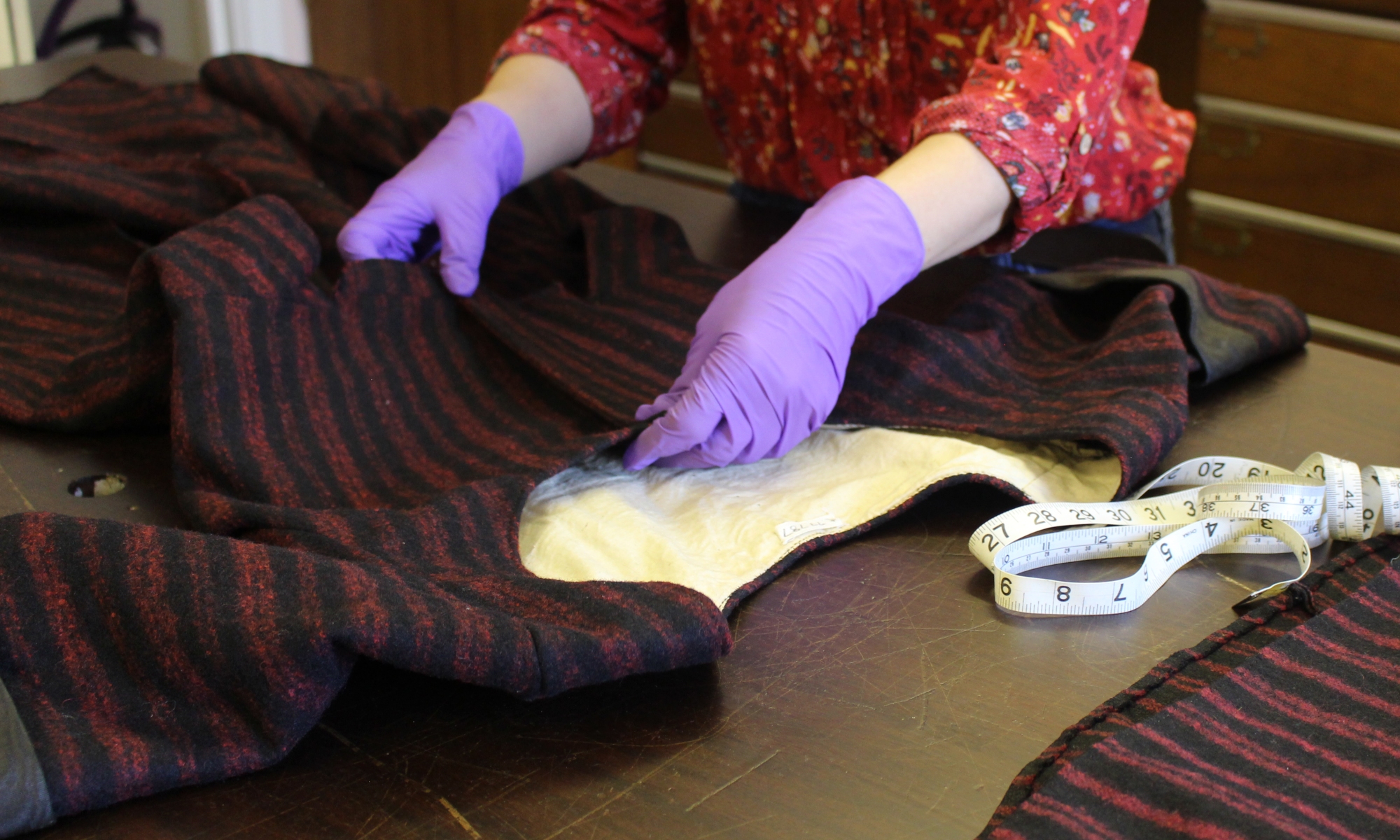
Rwyf wrth fy modd ein bod wedi gallu ymweld ag Amgueddfa Sir Gaerfyrddin heddiw i gwrdd รข’r Cadwraethwr Joanne Cook ac edrych ar ddau fetgwn Cymreig gwreiddiol o’r casgliad.

Rydym yn gwneud betgwn ar gyfer un o’n tair gwisg Rebecca ac mae Louise wedi bod yn meddwl am sut i’w wneud drwy edrych ar adnoddau ar-lein. Roedd yn wych gallu cael golwg ar y dillad yn ofalus i ddeall mwy am sut maen nhw’n cael eu creu.

Gwnaed y betgynau ar ddechrau a chanol y 19eg ganrif ac maent yn wlanen รข stribiau coch a du gyda chyffiau sidan wedi’u marcio รข dลตr. Cafodd y darnau eu pwytho รข llaw. Roedd Joanne hefyd wedi dewis eitemau eraill o ddillad i’n dangos ni. Dwy bais wlรขn mewn patrymau stribed a ffedog wlanen siec. Roedd yr eitemau wedi’u gwisgo’n dda ac roedd yn arbennig gweld y marciau traul gan eu perchnogion. Band gwasg lliain wedi’i wisgo’n dda; botymau gwahanol a thyllau botymau wedi’u hatgyweirio; rhwygau wedi’u trwsio; ymylon wedi’u gwisgo a’u treulio.


I’m delighted that we were able to visit Carmarthenshire Museum today to meet Conservator Joanne Cook and look at two of the original Welsh flannel betgwns from the collection.

We’re making a betgwn for one of our three Rebecca costumes and Louise has been puzzling over the construction from online resources. It was great to be able to have a look at the garments closely to understand more about how they are put together.

The betgwns were made in the early and mid-19th Century and are red and black striped flannel with water marked silk cuffs. The pieces were stitched by hand.

Joanne had also selected a few other garments to show us as well. Two woollen petticoats in stripe patterns and a blue check flannel apron. The pieces had been well worn and it was poignant to see the marks of wear and tear that had been left by their owners. A well-worn linen waistband; mismatched buttons and repaired buttonholes; mended tears; worn and fraying edges.

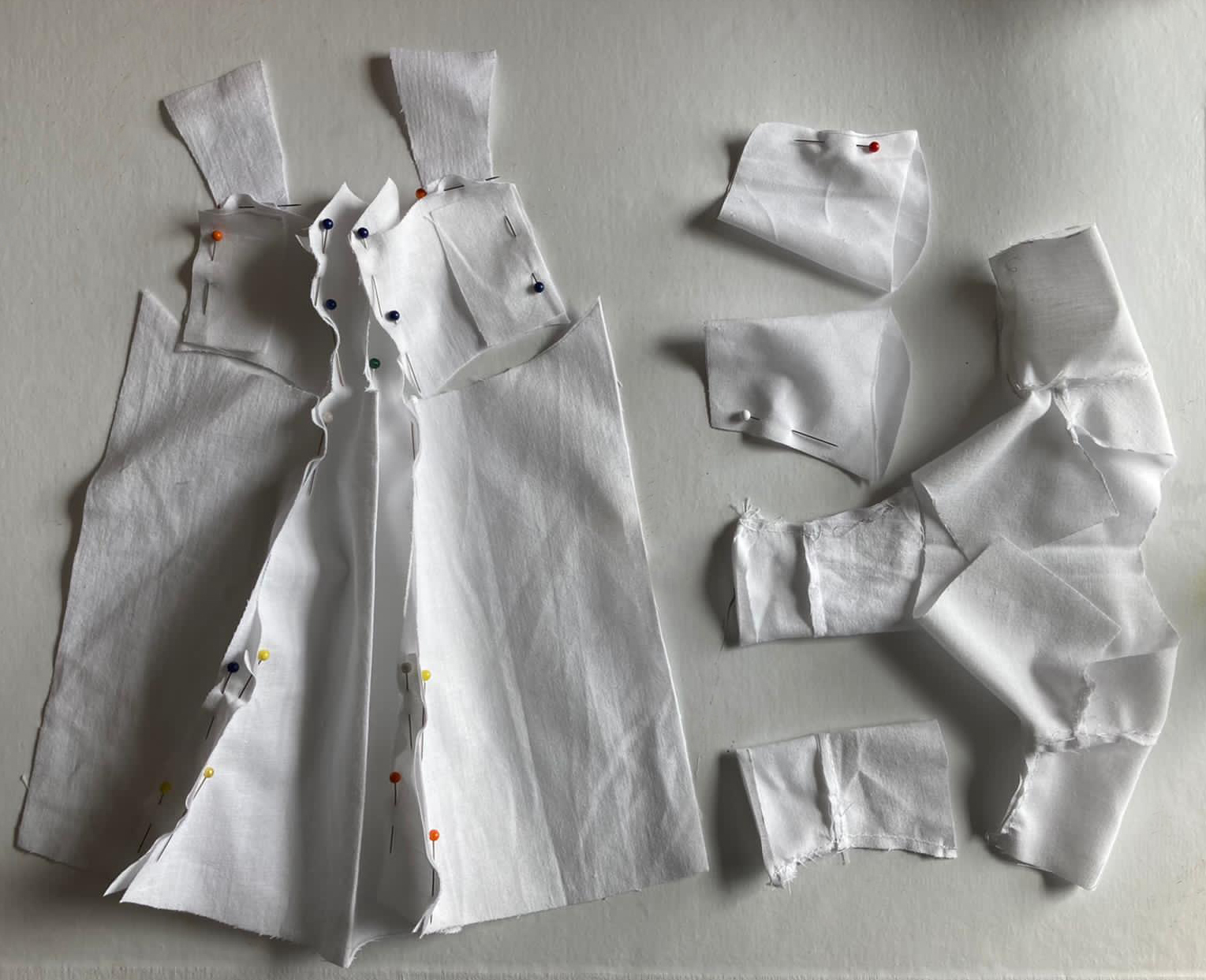
Louise has tested out the betgwn design in miniature to understand the pattern before we make it up to full size for the our third Rebecca costume.

betgwn pattern in miniature